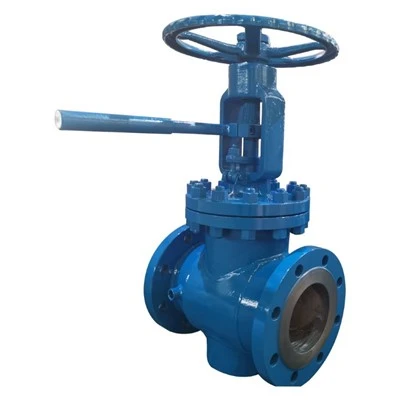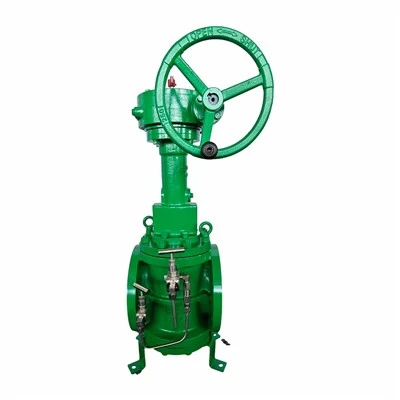

The Twin Seal Orbit Plug Valve is an isolation valve for pipeline and process systems requiring bidirectional shutoff and Double Block and Bleed (DBB) service. Its configuration is suited to pipeline and process isolation duties.
Key Specifications
|
Parameter |
Specification |
|
Product Type |
Twin Seal Orbit Plug Valve |
|
Configuration |
Full Port |
|
Valve Function |
Double Block and Bleed (DBB) |
|
Sealing |
Twin Seal / Dual Seal |
|
Nominal Size |
NPS 2–36 in. |
|
Pressure Class |
ASME Class 150–900 |
|
End Connection |
RF / RTJ / Butt Weld |
|
Flow Direction |
Bidirectional |
|
Operation |
Quarter-Turn; Manual or Actuator-Operated |
|
Body Material |
Stainless Steel / Alloy |
|
Trim |
Project-Specific |
|
Seat |
Project-Specific |
|
Temperature |
Up to 450°F |
|
Face-to-Face |
Applicable ASME B16.10 Dimensions |
|
Design Standards |
API 6D, ASME B16.34 |
Orbit Mechanism & Operation
Lift-and-Rotate Plug Movement
The orbit mechanism separates the plug from the sealing surfaces before rotation. During opening and closing, the plug first lifts away from the seat and then rotates to the required position. This movement limits sliding contact between the plug and sealing surfaces during rotation.
Quarter-Turn Operation
Once the plug is disengaged, it rotates through 90° between the open and closed positions. The operating arrangement can be configured for manual control or actuator operation where remote or automated valve operation is required.
Reduced Sealing-Surface Contact
Because the plug does not rotate while fully engaged with the sealing surfaces, the operating cycle does not rely on continuous sliding contact between the plug and seat. This is an important consideration for applications where sealing-surface wear needs to be controlled.


Twin Seal & DBB Function
Twin Sealing Arrangement
The valve uses two independent sealing interfaces between the plug and body. When the valve is closed, the two seals separate the upstream and downstream sides from the valve cavity, forming the basic isolation arrangement required for DBB service.
Cavity Bleed & Verification
After the valve is closed, the valve cavity can be accessed through the bleed connection. Releasing or monitoring the trapped cavity pressure provides a means of checking the isolation condition between the two sealing interfaces.
Bidirectional Isolation
The twin-seal configuration supports isolation from either flow direction. This allows the valve to be installed at pipeline or process isolation points where bidirectional shutoff is required.
Materials & Service Applications
Body, Seat & Trim Selection
Stainless steel and alloy body options are available, while seat and trim materials can be specified according to the service medium, temperature, pressure and corrosion conditions. Final material selection should be based on the valve datasheet and project service requirements.
Pipeline Isolation
The full-port flow passage and bidirectional isolation make the valve applicable to pipeline isolation duties where a DBB arrangement is specified.
Oil & Gas and Process Systems
The twin-seal and bleed arrangement is applicable to oil and gas pipelines, refinery and process systems requiring isolation with cavity pressure checking.
Water & Other Process Lines
Material and sealing configurations can be matched to water treatment and other process services where the specified pressure, temperature and medium are compatible with the valve configuration.

Quality Control & Compliance
Dimensional & Assembly Inspection
Valve dimensions, component fit and assembly condition are checked against the specified valve configuration and applicable order requirements.
Pressure & Functional Testing
Completed valves are subject to pressure and functional testing to verify valve operation and sealing performance. Additional inspection and testing requirements can be included in the project specification.
Final Inspection
Final inspection covers valve identification, configuration, visible condition and required documentation before shipment.
Certification & Inspection Documents
Applicable certification and inspection documents can be supplied according to the order and project requirements. The available documentation includes API 6D, CE, ISO 9000 and API 607-related documentation where applicable. The required certificate type and document scope should be specified during quotation.

FAQ
Q: What information should be included in an RFQ for a Twin Seal Orbit Plug Valve?
A: Please provide valve size, pressure class, service medium, pressure, temperature, end connection and quantity.
Q: What material information is required for quotation?
A: Please specify the body, seat and trim materials, or provide the applicable material requirements.
Q: What is the MOQ?
A: MOQ is discussed according to the valve configuration and order scope.
Q: What is the typical lead time?
A: Standard configurations generally require about 4–8 weeks. Special materials, large sizes or customized configurations may require additional time.
Q: How are the valves packaged for shipment?
A: Packaging is arranged according to the shipping method and order requirements. Sea freight, air freight, and land transportation can be accommodated for delivery planning.
Q: What technical documents can be provided with the valve?
A: Applicable product, inspection and certification documents can be supplied according to the order requirements, including relevant compliance and certification documentation where applicable.
Q: Can drawings or valve schedules be submitted for quotation?
A: Yes. Valve schedules, datasheets, drawings and project specifications can be submitted together with the required quantity for technical review and quotation.
Hot Tags: twin seal orbit plug valve, China twin seal orbit plug valve manufacturers, suppliers, factory, API DBB Orbit Plug Valve, API DBB Plug Valve, DBB Plug Valve with Electric Actuator, Dual Expanding Plug Valve, Full Port Twin Seal Plug Valve, Twin Seal Orbit Plug Valve